
'...to come back to power because it was not doing well.'
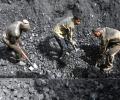
The government can auction 100 blocks that have been identified by the Geological Survey of India or exploration.
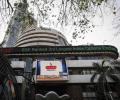
The 30-share Sensex and the 50-share Nifty ended flat at the mark of 27,403 and 8,248 respectively.
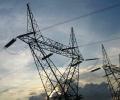
The statement comes in the wake of reports that warned of power crisis looming large due to the coal shortage in the country.

Acquisitions may have played a role in much of the increase.

It is imperative to check the basics of a company before investing in it

'Welfare schemes are not a necessary evil, they are a necessary good.'

The dollar moved higher, while prices for US government debt fell, as traders ramped up bets the Federal Reserve would raise interest rates in March

Congress leader Rahul Gandhi on Thursday said the party will go into the Punjab assembly polls with a CM face and the decision on it will be taken soon after consulting party workers.

Siva Prasad Nanduri, chief business officer, TeamLease Digital, outlines the skills that will help you get a job in 2023.

What we want from spectrum allocation is access to broadband networks at prices that will result in productivity gains.

TCS was the top gainer in the Sensex pack, rising over 3 per cent, followed by L&T, Bharti AIrtel, HCL Tech, Tata Steel, Bajaj Auto and Reliance Industries. NSE Nifty rallied 164.70 points to its fresh closing peak of 16,529.10.

Successive governments focused on altering the clearance processes but largely gave a pass to the second, and essential, element of environmental regulations for monitoring pollution levels and how industries followed conditions laid down for clearances.
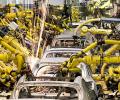
The company's planned capex for 2019-2020, which was Rs 12,000 crore, has now been revised down to around Rs 8,000 crore.

The Reserve Bank of India (RBI) is likely to keep monetary policy steady in June despite sluggish economic activity as inflation remains elevated, a Reuters poll showed on Wednesday.

'The answer for a quicker boost to growth is simple -- run a much larger deficit, use the resulting public resources to ensure adequate price support for agriculture, subsidise wage costs of MSMEs and accelerate public sector construction-intensive activities,' advises Nitin Desai.
This is because the government's move might dim the possibility of taking over the 42 blocks permanently.

Recalibrating data of past years using 2011-12 as the base year instead of 2004-05, the Central Statistics Office estimated that India's GDP grew by 8.5% in the financial year 2010-11 and not at 10.3% as previously estimated.

March and April payrolls were revised to show 32,000 more jobs.

Gandhi said that the BJP government has clearly mishandled the economy that was built by the United Progressive Alliance government, and is now resorting to selling the country's assets as a "last resort" to generate some money.
Manufacturing sector, which constitutes over 77 per cent of the index, showed a decline of 0.4 per cent in June as compared to a growth of 7.5 per cent in the same month last year.

When the world was upended by the Covid-19 pandemic, metals got its shine back. In the last two years, infrastructure spending by major economies spurred demand, energy transition and intermittent supply disruptions fuelled a scorching rally in metals after a downturn during the first Covid wave. Now, Russia's war on Ukraine is ensuring that elevated prices stay the course.

'Increased allocations for MNREGA could have provided the much needed push to rural demand and consumption at a time when recovery continues to remain uneven.'

Last month, Prime Minister Narendra Modi had said that the economy is showing "green shoots" as the country emerges from the coronavirus lockdown and underscored the importance of being focussed on both life and livelihood.

IIP growth rises to 9-month high of 4.3 pc in August

The gross domestic product had expanded by 8 per cent in the April-June quarter of 2011-12.

India's economy could prove to be the "most resilient" in the subregion of South and South-West Asia over the long term, according to a report by the UN, which says a positive but lower economic growth post COVID-19 pandemic and the country's large market will continue to attract investments. The report titled 'Foreign Direct Investment Trends And Outlook In Asia And The Pacific 2020/2021', and compiled by United Nations Economic and Social Commission for Asia and the Pacific (UNESCAP), stated that inward FDI flows to South and South-West Asia slightly decreased by 2 per cent in 2019, from $67 billion in 2018 to $66 billion in 2019. The growth, however, was mainly driven by India, which accounted for 77 per cent of the total inflows to the subregion and received $51 billion in 2019, up 20 per cent from the previous year.

'Wherever in the world there is political instability, those countries are beset with severe crises today. But India is in a much better position than the rest of the world due to the decisions taken by my government in the national interest,' President Droupadi Murmu said in her address to both Houses of Parliament.

Several types of investment risks can threaten your portfolio -- some are easier to avoid than others

In the aviation sector, 100 per cent FDI is allowed under automatic route for MRO (maintenance, repair, overhaul), ground handling, and aircraft purchase.

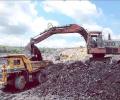
The Coal Ministry has decided to constitute a six-member panel for valuation and assessment of the 42 running coal blocks which were deallocated by the Supreme Court.

As part of the energy sector reforms, government is trying to evolve a consensus on commercial mining of coal to promote development of the sector, Coal Minister Sriprakash Jaiswal said.

10 stocks which are most popular with brokerages right now and are expected to deliver maximum upside over the next 12 months.

Metal shares gained on hopes that the government may adopt ordinance route for mines sector reforms

The IIP data showed a significant slowdown in the manufacturing sector, which grew at 4.2 per cent in July 2019 as compared to 7 per cent a year ago.
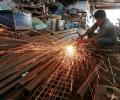
The government has held back the release of complete data of the Index of Industrial Production (IIP) for April, as was done for the same month last year due to the COVID-19 lockdown. Last year in June, the National Statistical Office (NSO) had held back the release of complete IIP data due to the effect of the nationwide lockdown on factory output. This year too industrial production was hit due to lockdown restrictions imposed by states to curb the second wave of the pandemic.

Industrial production expanded a provisional 3.4 per cent year-on-year in June.

Manufacturing sector, which constitutes over 75 per cent of the index, grew at 5.5 per cent in November compared to a decline in output by 4.6 per cent earlier

After the Ladakh fiasco where Xi Jinping did not expect the Indian Army to resist his land-grabbing tactics, he has to save face before his colleagues in the Communist party.' To bring the threat of a mega-dam to the northern Indian border is a clever move, observes Claude Arpi.

The economy has shown sharp resilience in the past and has also bounced back in good time. We could hence expect a similar trajectory next year, observes Madan Sabnavis, chief economist, CARE Ratings.
